
Why Is My Dog Shedding So Much? Causes & What Helps

Short answer: Some shedding is completely normal — most dogs "blow their coat" once or twice a year as seasons change, and double-coated breeds shed more than others. But if you're seeing bald patches, a dull or brittle coat, constant shedding with no seasonal pattern, or shedding paired with itching and flaking, it's worth a closer look. Diet, skin health, stress, and underlying medical issues can all turn normal shedding into a bigger mess than it should be — and in most healthy dogs, a well-balanced diet with enough omega fatty acids strengthens the skin barrier that holds hair in place. Persistent or patchy shedding always deserves a vet visit to rule out thyroid, allergy, or parasite causes before you try anything else.
Our founder went down this exact rabbit hole with Normie, our service dog — a lab-mix with a coat that sheds year-round no matter what. What actually moved the needle wasn't a fancy shampoo. It was consistency: brushing on a schedule, a real look at his food, and giving his skin and coat the nutrients they needed to do their job.
Normal Shedding vs. a Problem
Every dog with hair sheds — it's part of the natural growth cycle. What varies is how much and when.
- Seasonal "blowing coat": Common in double-coated breeds (Huskies, Labs, Golden Retrievers, German Shepherds) each spring and fall as they swap winter undercoat for a lighter summer one. This can look dramatic — tufts of fur, daily brush-outs — but it's temporary and typically resolves in a few weeks.
- Steady, low-level shedding: Most breeds shed a little year-round. This is normal background maintenance, not a red flag.
- Excessive or abnormal shedding: Bald spots, thinning patches, a coat that looks dull or brittle instead of glossy, or shedding that never seems to stop and doesn't track with the seasons. This is the pattern that's actually worth investigating.
If you can't remember the last time your dog didn't seem to be shedding heavily, or you're finding thin spots when you part the fur, that's the signal to dig deeper rather than just buying a better vacuum.
Common Causes Behind Excessive Shedding
Diet gaps. Hair is mostly protein, and the skin that anchors it relies on fatty acids (especially omega-3 and omega-6) to stay strong and hydrated. A diet that's low in quality protein or fat can show up first as a dull, shedding-prone coat.
Skin conditions. Allergies, dry skin, and irritation don't just cause itching — inflamed or flaky skin sheds hair faster than healthy skin does. If shedding comes with scratching, redness, or visible flakes, the coat problem may really be a skin problem.
Stress and anxiety. Dogs can shed heavily during and after stressful events — vet visits, thunderstorms, moving, a new pet in the house. This is a real physiological stress response, not just "in your head."
Parasites. Fleas and mites are a classic, sometimes hidden, cause of excess shedding, hair loss, and skin damage — worth ruling out even if you don't see fleas directly.
Underlying medical issues. Thyroid disease, hormonal imbalances, and some chronic illnesses can cause noticeable coat changes. This is exactly why patchy, sudden, or severe shedding should go through your vet rather than getting guessed at home.
Age. Coats often change texture and shed differently as dogs get older, sometimes alongside other signs of slowing down that are worth mentioning at a vet visit too.
What Can Help
Talk to your vet first if shedding is sudden, severe, patchy, or paired with itching, redness, or flaking. Ruling out parasites, allergies, or a medical cause is the responsible first step — everything below is meant to maintain a healthy coat, not replace veterinary care.
Brush consistently. Regular brushing removes loose undercoat before it ends up on your couch, distributes natural skin oils through the fur, and gives you an early look at any new bald patches, hot spots, or flaking.
Look at the food bowl. A diet with adequate, quality protein and fat is foundational to coat health. If you're already feeding a good diet and still seeing a dull or shedding-prone coat, that's often where added omega-3s come in.
Strengthen the skin and coat directly. This is where our Skin & Coat Soft Chews come in — formulated with omega fatty acids and skin-focused ingredients that build a healthier coat and stronger skin barrier over time as part of a normal diet. They're not a fix for a medical shedding problem, but they're a simple daily addition for dogs whose coats could use extra nutrition.
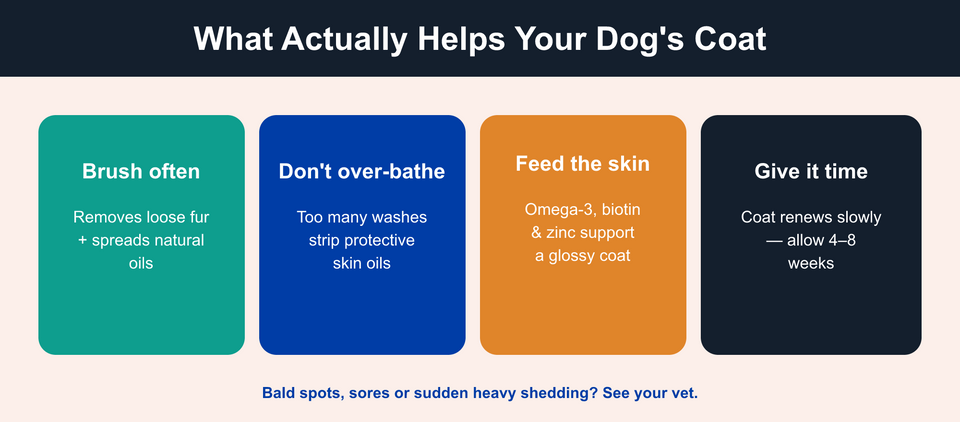
Manage stress where you can. If your dog shovels out fur after every vet visit or thunderstorm, look at ways to reduce anxiety triggers, and give them calm downtime to recover.
Keep skin calm with the right plan. Over-bathing can dry out skin and worsen shedding; under-brushing lets loose hair and irritation build up. A simple, steady plan usually beats an aggressive one.
Not sure whether your dog's specific symptoms point to a skin, diet, or joint issue? Our quick Skin & Coat Quiz walks through the signs and points you toward what's likely to help.
Get 15% off your first order
Take the free 60-second Skin & Coat quiz for a tailored starting point and unlock 15% off.
Take the Skin & Coat Quiz →Frequently Asked Questions
Is it normal for my dog to shed a lot in spring and fall?
Yes — many breeds, especially double-coated ones, "blow their coat" seasonally as they transition between winter and summer fur. It can look like a lot of hair very quickly, but it's typically temporary and not a cause for concern on its own.
Can food really affect how much my dog sheds?
Diet plays a real role in coat health. Hair and skin need adequate protein and fatty acids to stay strong, so a diet that's lacking in either can show up as a duller, more shedding-prone coat. Always run diet changes by your vet, especially for dogs with existing health conditions.
When should excessive shedding worry me?
When it's paired with bald patches, thinning, redness, itching, flaking, or when it doesn't follow a seasonal pattern and just doesn't let up. Those signs warrant a vet visit to rule out allergies, parasites, or a hormonal issue.
Do omega-3 supplements actually help with shedding?
Omega fatty acids improve skin hydration and the skin barrier, which is part of what keeps hair anchored and healthy. They build a healthier coat as part of a balanced diet, but they aren't a treatment for a medical cause of hair loss — see your vet if something seems off.
How often should I brush a heavily shedding dog?
During a seasonal blow-coat, daily brushing helps manage the volume and speeds up the transition. Outside of that, a few times a week is usually enough to stay ahead of loose fur and catch skin changes early.
Related skin and coat guides
- Omega-3 for dogs: fish oil for skin and coat explained
- Why does my dog keep scratching?
- Quercetin for dogs explained
This article is for general information and isn't a substitute for veterinary advice. Always consult your vet about your dog's specific health needs.