
Fish Oil for Dogs: Omega-3 Benefits for Skin & Coat
Fish oil can be a useful source of the long-chain omega-3 fatty acids EPA and DHA for dogs. Those are the two names worth looking for when you compare skin-and-coat products. A front label that says only “omega-3” does not tell you the source, how much EPA or DHA is present, how many chews your dog needs, or what the product will cost per day.
This guide explains the difference between EPA, DHA and plant-based ALA; what canine research actually shows; how to read a supplement label; and how PuzzlePup Skin & Coat Soft Chews fit into a daily plan.
Quick answer
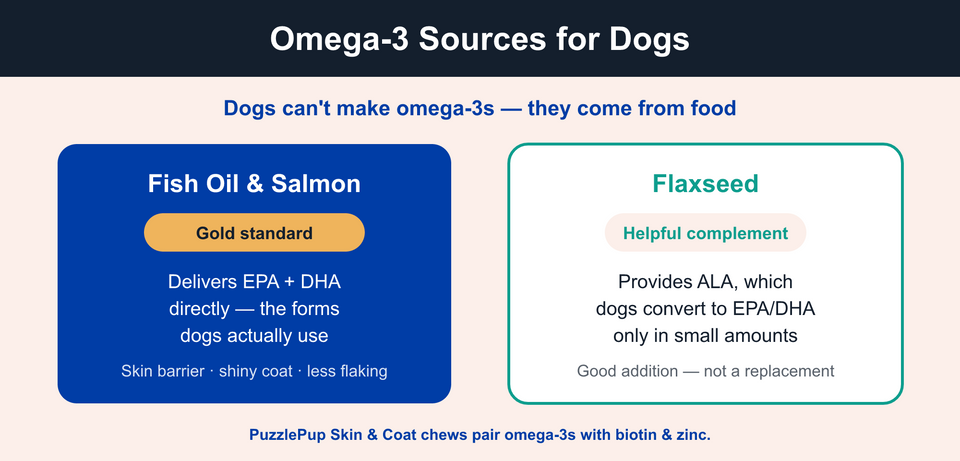
Fish oil supplies EPA and DHA directly. Flaxseed oil primarily supplies ALA, which dogs must convert before it can contribute EPA and DHA. For a product comparison, check the guaranteed EPA and DHA amounts, serving by weight, days per container, complete ingredient list and safe-use directions—not just the total omega-3 claim.
What are EPA, DHA and ALA?
Omega-3 is a family of fatty acids, not one single ingredient. The three names dog parents see most often are:
- EPA (eicosapentaenoic acid): a long-chain marine omega-3 commonly supplied by fish oil.
- DHA (docosahexaenoic acid): another long-chain marine omega-3 commonly supplied by fish oil.
- ALA (alpha-linolenic acid): a shorter-chain omega-3 found in plant oils such as flaxseed oil.
Dogs can metabolize ALA, but it is not the same thing as receiving preformed EPA and DHA. Controlled canine research comparing marine and plant sources found that the source changes how effectively EPA and DHA are reflected in the dog's omega-3 status. That is why a useful label identifies EPA and DHA instead of relying only on a broad “omega-3” statement. See the peer-reviewed dog study comparing fish, krill and flaxseed omega-3 sources.
What does the evidence say about fish oil for a dog's skin and coat?
Omega-3 supplements are not a cure for every cause of itching, shedding or coat change. Skin symptoms may also involve parasites, infection, food sensitivity, environmental allergy, grooming, nutrition or another medical problem.
Research does show a role for fatty acids as part of some canine skin-care plans. In a randomized, double-blinded trial involving dogs with atopic dermatitis, clinical scores improved in the groups receiving either flax oil or an EPA/DHA preparation, while the placebo group did not improve. The researchers also found that total fatty-acid intake and the omega-6-to-omega-3 ratio alone did not predict the response. Read the study abstract on omega-3 fatty acids and canine atopic dermatitis.
The practical takeaway is not that every itchy dog needs fish oil. It is that source, formulation, consistent use and the dog's underlying condition matter. Persistent itching, open skin, odor, hair loss, recurring ear trouble or sudden coat changes belong with a veterinarian rather than a supplement-only approach.
How to compare a fish-oil or skin-and-coat supplement
1. Look for EPA and DHA—not only “fish oil”
A fish-oil amount and an EPA/DHA amount are not interchangeable. Two products can contain the same total oil while delivering different fatty-acid profiles. Prefer a label that identifies EPA and DHA in a guaranteed analysis or exact amount.
2. Check the serving for your dog's weight
The container count means little without the daily serving. A 60-chew jar may last 60 days for one dog and only 20 days for another. Use the actual weight-based direction when comparing value.
3. Read the complete ingredient and allergen information
Fish oil is not appropriate for every dog. Check the full ingredient panel for fish, egg, beef, soy or other ingredients that matter to your dog's diet and sensitivities. Introduce one plan change at a time so that you can observe tolerance.
4. Compare cost per day, not just jar price
Divide the price by the number of days the jar lasts at your dog's serving. This gives a realistic comparison across soft chews, liquids and capsules.
5. Avoid instant-result promises
Skin and coat plans require consistency, and the visible timeline varies. A supplement should not promise to diagnose, cure or replace treatment for a skin condition.
PuzzlePup Skin & Coat: current label and value facts
PuzzlePup Skin & Coat Soft Chews combine fish oil and flaxseed oil in a vet-formulated daily soft chew. The current guaranteed analysis is listed per two soft chews (6 g):
- Omega-3 fatty acids: 5% minimum
- EPA: 1.25% minimum
- DHA: 0.8% minimum
- Vitamin A: 1,100 IU minimum
- Vitamin D3: 50 IU minimum
- Biotin: 0.2 mg minimum
The label directions are one soft chew per 25 pounds of body weight daily. Each $34.99 jar contains approximately 60 chews.
| Dog weight | Daily serving | Approx. days per jar | Approx. cost per day |
|---|---|---|---|
| Under 25 lb | 1 chew | 60 days | $0.58 |
| 25–50 lb | 1–2 chews | 30–60 days | $0.58–$1.17 |
| Over 50 lb | 2–3 chews | 20–30 days | $1.17–$1.75 |
The label-stated role is daily nutrition for a healthy skin barrier and hydration, dry or flaky skin and shedding, a softer and shinier coat, and healthy skin and follicles. It is intended for intermittent or supplemental feeding, not as a treatment for a diagnosed skin disease.
Not sure whether your dog needs Skin & Coat or Allergy formula?
Use the free 60-second PuzzlePup match quiz for a non-diagnostic starting point, weight-based serving guidance and the current first-order offer.
Safe use: when to ask your veterinarian first
Follow the product's weight-based serving and do not stack several fish-oil products without calculating the combined intake. Ask your veterinarian before adding fish oil if your dog takes an anticoagulant or NSAID, has a clotting disorder, diabetes, diarrhea, a history of pancreatitis, is pregnant or nursing, or has reacted to fish or another listed ingredient.
Stop and contact your veterinarian if you notice an allergic reaction, abnormal bruising or bleeding, appetite loss, persistent digestive upset or another unusual change. VCA's veterinarian-authored fish-oil safety overview provides additional interaction and monitoring guidance.
Frequently asked questions
Is fish oil the same as omega-3?
No. Fish oil is one source of omega-3 fatty acids. EPA, DHA and ALA are different omega-3s, and their source and amount matter when comparing products.
Is flaxseed oil enough for a dog?
Flaxseed oil supplies ALA and can be a useful ingredient, but it does not provide the same starting profile as a marine source that supplies EPA and DHA directly. Evaluate the complete formula rather than treating the two oils as identical.
How long does a 60-chew jar last?
At the PuzzlePup label serving of one chew per 25 pounds daily, approximately 60 chews last about 60 days under 25 pounds, 30–60 days at 25–50 pounds, or 20–30 days over 50 pounds.
Can fish oil replace care for an itchy dog?
No. Itching has many possible causes. Fish oil can be part of a nutritional plan, but persistent, painful or skin-damaging symptoms require veterinary evaluation.
Should I choose Skin & Coat or Allergy Soft Chews?
Skin & Coat is the direct route for a skin-barrier, dry-skin, shedding or coat goal. Allergy maintains healthy immune and allergic response. If the pattern is unclear, start with the PuzzlePup match quiz or compare the two formulas in the Itch & Skin Relief Duo.