
12 Indoor Dog Enrichment Ideas for Rainy or Busy Days
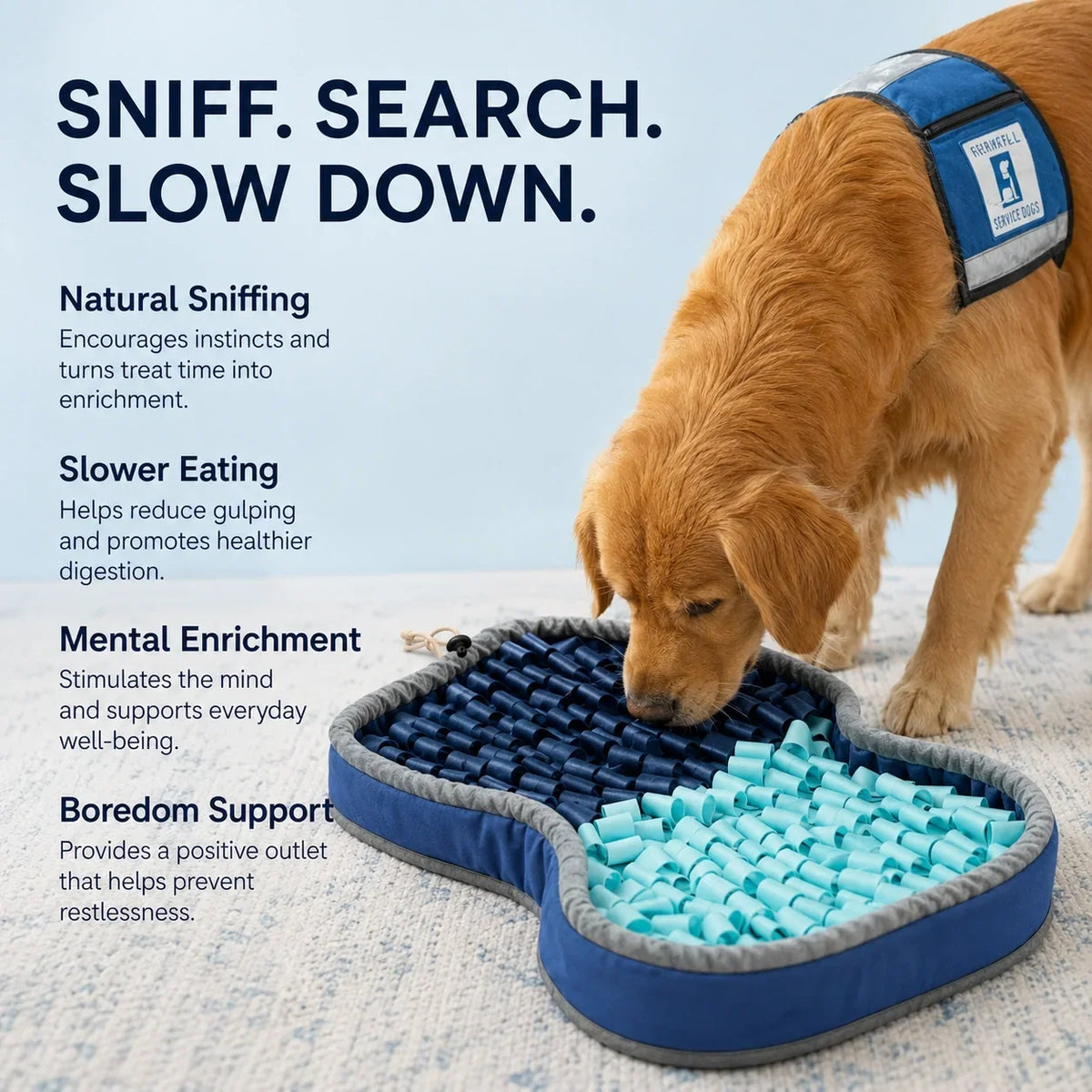
Indoor enrichment does not require a room full of toys. The strongest activities give a dog one clear job: search, solve, learn, choose, or settle. Start easy, supervise, and stop before the dog becomes frustrated.

12 indoor dog enrichment ideas
1. Surface snuffle search
Scatter part of a dry meal across the top of a supervised Snuffle Mat. Keep the first session obvious; deeper hides come later.
2. Room-to-room find it
Place a few counted rewards in easy, low hiding spots. Release the dog from the same starting point and remove anything not found.
3. Find the person
One person holds the dog while another hides nearby and calls once. Celebrate the find with praise or play.
4. Two-cup choice
Hide food under one of two sturdy cups. Let the dog indicate a choice, then lift the cup. Prevent chewing or swallowing the setup.
5. Toy rotation
Offer two safe toys and store the rest. Swap the pair every few days so familiar objects regain novelty.
6. Three-cue training chain
Link three behaviors your dog already knows. Keep it quick and reward with praise, play, or food that fits the dog's diet.
7. Box search
Use open, stable boxes as scent stations. Hide food in only a few and supervise closely so cardboard is not eaten.
8. Name the toy
Choose one toy, say its name before play, then ask your dog to touch or retrieve it from a very small selection.
9. Texture path
Arrange safe, non-slip household surfaces such as a yoga mat, low towel, and carpet square. Let the dog investigate at their pace.
10. Scented towel trail
Rub a clean towel on a favorite toy, drag it along a short route, and hide the toy at the end. Do not allow towel chewing.
11. Window-watch station
Create a comfortable, supervised observation spot only if outside activity does not trigger barking or distress. Pair it with a cue to leave the window.
12. Settle-and-release
Practice a calm mat or bed cue for a few seconds, release to a toy, then repeat. This alternates thinking with movement.
AAHA's July 2026 indoor-enrichment guide recommends scavenger hunts, new tricks, interactive feeding, and other indoor brain work. It also emphasizes increasing difficulty gradually. See AAHA's indoor enrichment guide.
Turn this list into a three-idea plan
The free generator filters activities by life stage, energy, time, food use, and indoor or outdoor setting.
Build today's activity planChoose by the time you actually have
Five minutes
Try a surface food search, toy rotation, two-cup choice, or three familiar cues. A short successful session is more useful than a long frustrating one.
Fifteen minutes
Use a room search, box search, find-the-person game, or a beginner scent trail. Include setup and cleanup in the time estimate.
Thirty minutes
Combine two categories instead of making one puzzle extremely hard: ten minutes of sniffing, a short training chain, then a predictable settle plan.

Make food enrichment part of the meal
If food is appropriate for your dog, use part of the normal ration instead of automatically adding extra calories. Choose dry food for fabric search toys and follow the product's care instructions. The current PuzzlePup mat is designed for dry kibble or dry treats, machine washing on a gentle cold cycle, and flat air drying.
Browse the Dog Guides Library for more practical enrichment ideas.
Safety rules that apply to every idea
- Supervise food, fabric, cardboard, and object-search games.
- Keep hiding spots away from cords, medication, cleaning products, trash, stairs, and fragile objects.
- Use objects too large to swallow and remove damaged materials.
- Give multiple dogs separate spaces to prevent competition.
- Choose non-slip footing and adapt the game for puppies, seniors, and dogs with mobility limits.
- Stop if the dog is panting heavily, avoiding the setup, chewing it, guarding it, or showing frustration.
Frequently asked questions
Is mental stimulation a replacement for exercise?
No. Thinking and sniffing are useful parts of a balanced plan, but dogs still need physical activity that fits their age and health.
What if my dog solves every puzzle immediately?
Change one variable at a time: add distance, use one new hiding spot, or combine two easy stages. Do not jump from obvious rewards to an impossible setup.
What if my dog chews enrichment toys?
End the session, remove the item, and choose a different supervised activity. A snuffle mat and most puzzle toys are not chew toys.
Related: seven possible signs of dog boredom and gentle mental stimulation for senior dogs.
Choose a more specific activity guide
Match the activity to the space and job your dog needs today.
8 scent games for dogs at home →
Use the interactive picker to choose by space and experience.
Quiet dog enrichment for apartments →
Filter ideas by noise level, time, and whether you want to use food.