
7 Signs Your Dog Is Bored (and What to Do Today)
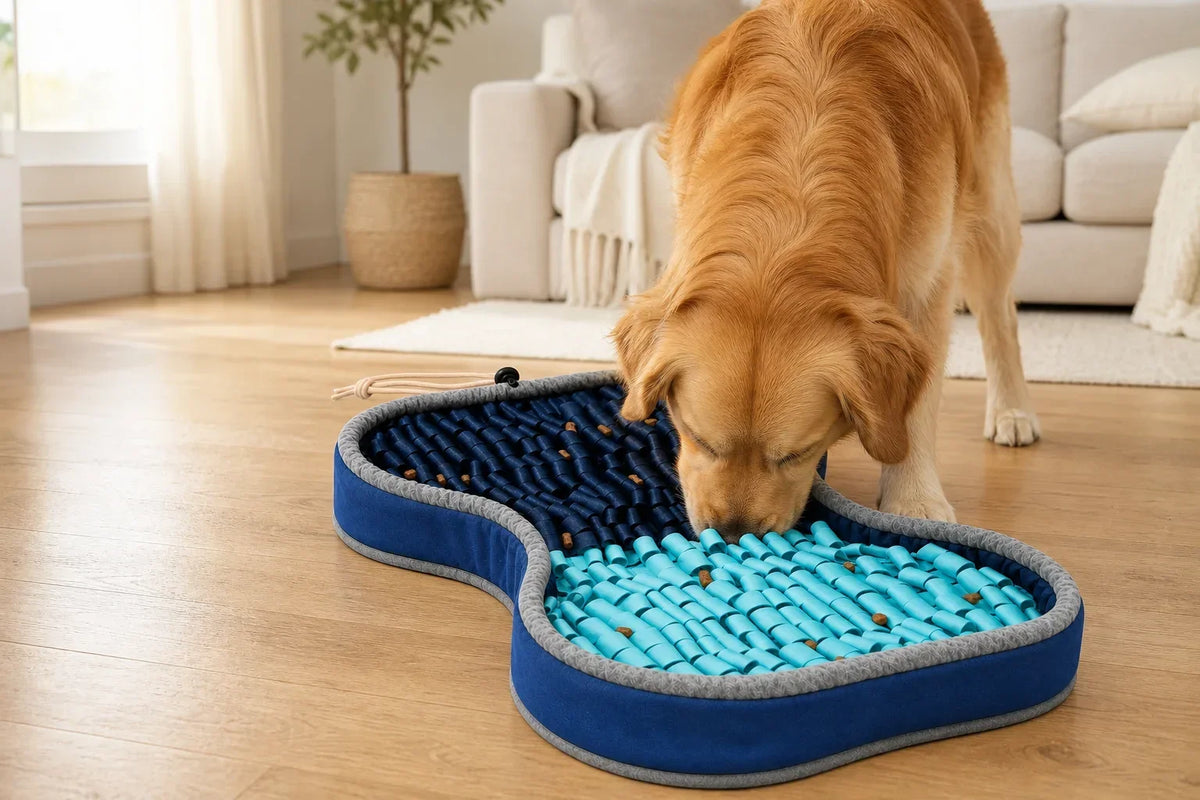
A dog who has nothing useful to do will often invent a job. Sometimes that job is shredding paper, barking at every sound, or following you from room to room. The clue is not one behavior by itself. It is a pattern: the behavior appears when the day is repetitive and improves when the dog gets an appropriate outlet.
Seven common signs of dog boredom
The American Kennel Club also lists chewing, shredding, digging, attention seeking, restlessness, jumping, and excessive barking among possible boredom signals. It recommends physical exercise, scent games, food puzzles, training, and toy rotation as outlets. See the AKC boredom guide.
Bored, anxious, uncomfortable, or simply energetic?
Do not use a boredom checklist as a diagnosis. Destruction that happens only when a dog is alone, frantic escape behavior, heavy drooling, house soiling, sudden behavior changes, compulsive actions, or a new inability to settle deserve closer attention. Pain, gastrointestinal problems, cognitive changes, and separation-related distress can look like "bad behavior."
| Pattern | Useful next step |
|---|---|
| Improves after a sniff walk, training game, or food search | Add a predictable daily enrichment block and track the response. |
| Appears suddenly or comes with appetite, sleep, mobility, or bathroom changes | Contact your veterinarian. |
| Happens mainly during absences and looks panicked | Record the behavior safely and discuss it with a qualified trainer, behavior professional, or veterinarian. |
| Gets worse when games become difficult | Make the task easier. Frustration is not the goal. |
A ten-minute boredom reset

- Two minutes: let your dog sniff outside or around a safe room without rushing them.
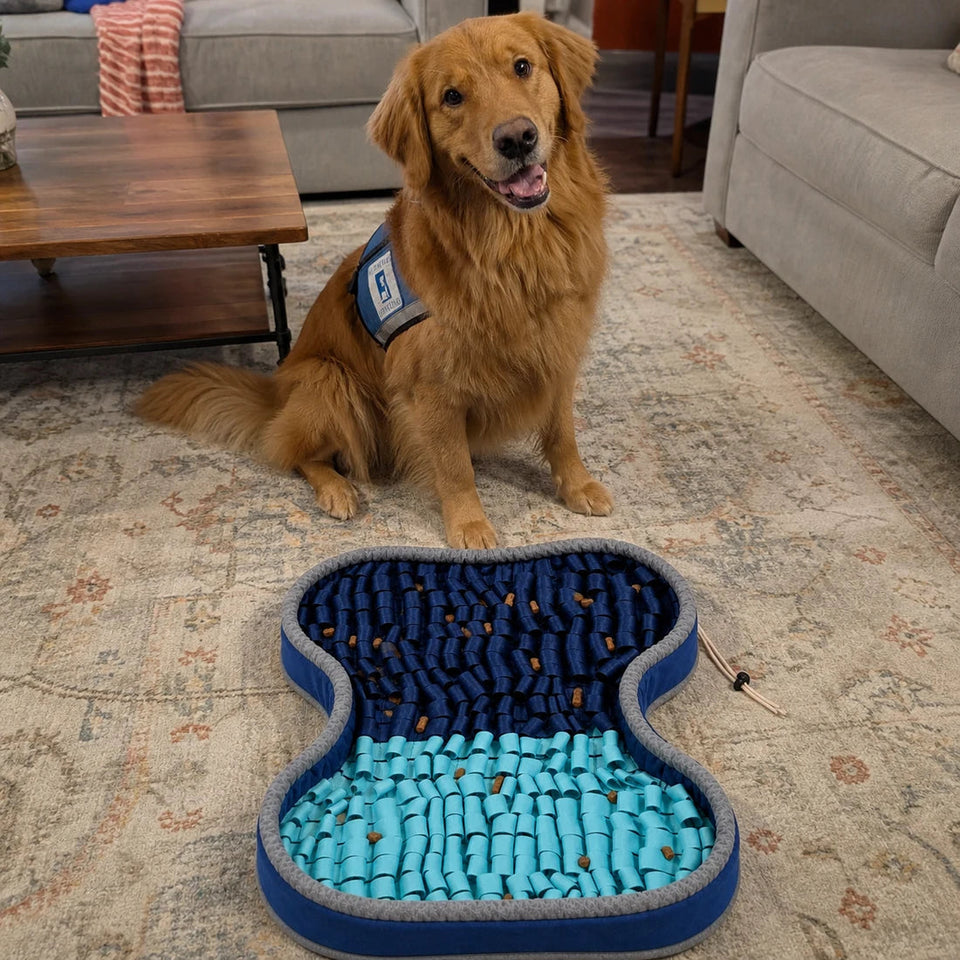
- Five minutes: use an easy find-it game, a surface scatter on a supervised Snuffle Mat, or three familiar training cues.
- Three minutes: offer water, lower the excitement, and give your dog a clear place to settle.
Start below your dog's maximum difficulty. A beginner should find rewards on the surface. A senior dog may need shallow hides and non-slip footing. A fabric-search toy is not a chew toy and should be put away after the food is gone.
Not sure what fits today?
Choose your dog's age, energy, available time, food preference, and location. The free tool returns three ideas instantly.
Use the free activity generatorBuild a plan, not an entertainment marathon
More stimulation is not always better. Alternate categories: sniffing one day, short training the next, a slower exploratory walk, then toy rotation. Keep the activity safe, achievable, and short enough that your dog can finish successfully. AAHA's current overview describes cognitive, food, sensory, physical, and social enrichment as complementary categories rather than one universal solution. See AAHA's enrichment guide.
For more options, use the indoor enrichment idea list. If rushed meals are part of the pattern, compare a snuffle mat and a slow-feeder bowl.
Frequently asked questions
Can a bored dog sleep a lot?
Yes, but sleep alone does not identify boredom. Age, health, plan, temperature, and normal individual sleep needs all matter. A major change in sleep should be discussed with a veterinarian.
Do dogs need enrichment every day?
Most dogs benefit from daily opportunities to sniff, explore, train, forage, play, or interact socially. The type and amount should fit the individual dog.
Will a snuffle mat fix destructive behavior?
No single product fixes every cause of destruction. A snuffle mat can provide one supervised food-search outlet; persistent or severe behavior needs a broader assessment.
Choose a more specific activity guide
Match the activity to the space and job your dog needs today.
8 scent games for dogs at home →
Use the interactive picker to choose by space and experience.
Quiet dog enrichment for apartments →
Filter ideas by noise level, time, and whether you want to use food.