
Natural Help for Dog Seasonal Allergies: A Practical Home Plan
Short answer: the most useful natural help for a dog with seasonal allergies is a repeatable plan that reduces how much pollen, grass, mold, dust, and flea exposure reaches the skin. Wipe your dog down after outdoor time, use baths strategically, keep bedding and floors clean, maintain year-round flea prevention, and track when symptoms flare. These steps do not cure allergies or replace veterinary treatment, but they can reduce everyday trigger exposure and make a long-term plan easier to manage.
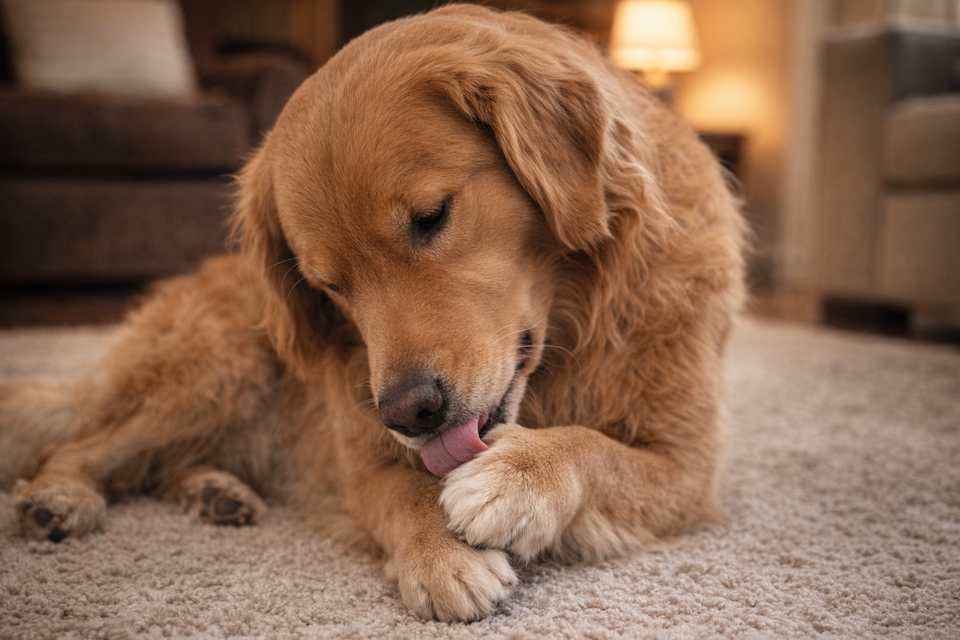
Seasonal allergies often look different in dogs than they do in people. Instead of sneezing, many dogs lick their paws, rub their face, scratch their ears, or develop red, irritated skin. The goal of a home plan is not to guess the diagnosis. It is to remove common environmental triggers, protect the skin barrier, and notice early when the problem needs veterinary care.
What this home plan can—and cannot—do
Environmental allergens are difficult to avoid completely. The Merck Veterinary Manual describes allergen avoidance as ideal but often difficult, and notes that bathing can reduce allergen load. The American Animal Hospital Association recommends a multimodal plan that may include trigger reduction, skin care, flea prevention, supplements, and veterinary treatment.
At home, you can reduce contact with likely triggers and keep a clearer record of what changes. You cannot determine from symptoms alone whether the cause is pollen, fleas, food, infection, parasites, or another skin problem. That distinction matters because each cause needs a different plan.
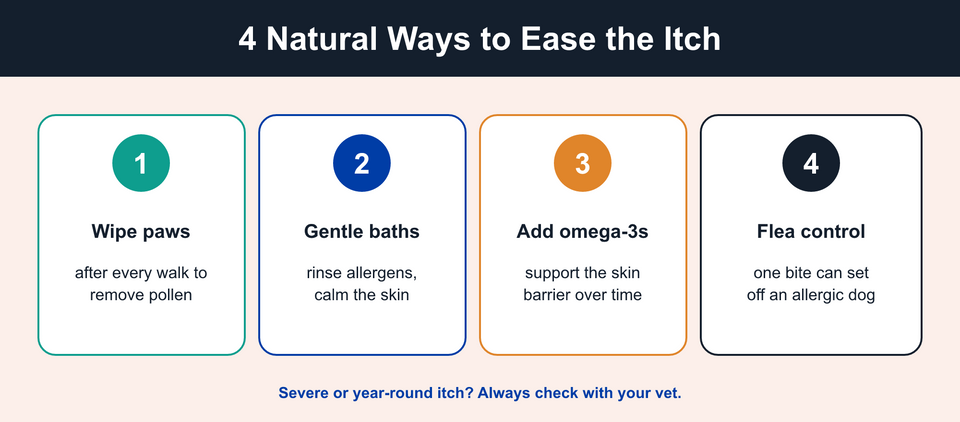
1. Do a two-minute reset after walks
After outdoor time, wipe the paws, between the toes, lower legs, belly, and any part of the coat that brushed through grass. Use a clean damp cloth or fragrance-free pet wipe, then dry the paws so moisture is not trapped between the toes.
- Keep a small towel and wipes by the door.
- Use a fresh section of the cloth for each paw.
- Check for seeds, burrs, cuts, swelling, or anything lodged between the toes.
- If your dog is already raw or sore, skip experimenting with new products and call your veterinarian.
This simple habit is most useful when it happens consistently during your dog’s usual flare season, not only after a particularly long walk.
2. Use baths to remove allergens—not as a quick fix
Merck notes that bathing is often one of the most practical ways to reduce allergen load. Bath frequency and shampoo choice should match your dog’s skin and any veterinary treatment plan. A gentle dog shampoo may be appropriate for plan cleaning, while medicated shampoos should be selected for the specific problem your veterinarian identifies.
- Rinse thoroughly so residue is not left on the skin.
- Dry the coat and skin well, especially around skin folds and paws.
- Stop if a product causes more redness, discomfort, or itching.
- Ask your veterinarian how often to bathe if your dog has recurring infections, very dry skin, or an active prescription plan.
3. Lower the trigger load inside your home
Your dog can carry pollen and dust back to the places where they sleep. During the weeks when symptoms are worst, make the sleeping area the cleanest part of the plan.
- Wash dog bedding and washable blankets regularly with a fragrance-free detergent.
- Vacuum the areas where your dog rests most often.
- Replace heating and cooling filters on schedule.
- Consider a properly sized air purifier in the room where your dog sleeps.
- Keep damp areas dry and address visible mold rather than masking the odor.
AAHA specifically includes air purification and reducing outdoor exposure during peak pollen periods among the options pet owners can discuss as part of flare management.
4. Adjust timing without eliminating exercise
If symptoms reliably worsen after certain routes, freshly cut grass, or high-pollen days, adjust the plan instead of removing exercise altogether. Choose paved or lower-grass routes, shorten exposure during the worst part of the season, and use indoor enrichment to replace some outdoor sniffing time.
A snuffle mat can provide supervised sniff-and-search enrichment indoors on days when you want to limit time in grass. Hide dry food or appropriate treats in the folds, start easy, and supervise every session.
5. Keep flea prevention consistent
Flea allergy can exist alongside environmental allergies, and one bite may be enough to trigger a sensitive dog. The VCA allergy treatment guidance emphasizes treating both the dog and the environment when fleas are involved. Use a prevention plan recommended for your dog by your veterinarian, and do not assume that “I do not see fleas†rules flea allergy out.
6. Track the pattern for two to four weeks
A short symptom log is more useful than trying five changes at once. Record:
- Where and when your dog walked
- Paw licking, scratching, face rubbing, ear discomfort, and sleep disruption
- Baths, wipes, food changes, preventives, supplements, and medications
- Photos of the same affected area in similar lighting
- Whether symptoms are seasonal or continue year-round
Bring the log to your veterinarian. The AAHA allergic skin disease guidelines stress the value of a complete history because food allergy, flea allergy, environmental allergy, parasites, and secondary infection can look similar from home.
7. Choose the next step by the problem you are solving
Home care, supplements, and medication serve different purposes. Use the page that matches your decision:
- Comparing daily supplement ingredients? Read our seasonal allergy supplement guide.
- Trying to understand antihistamines, prescriptions, or when medication is appropriate? Read allergy medicine for dogs.
- Not sure whether Allergy or Skin & Coat better matches the visible pattern? Use the 60-second PuzzlePup match quiz.
Build the plan around your dog’s pattern
Compare seasonal formula, exact label details, weight-based serving, and the difference between Allergy and Skin & Coat.
When home care is not enough
Contact your veterinarian if your dog has open sores, swelling, strong odor, discharge, rapidly spreading hair loss, repeated ear problems, marked pain, or itching that prevents normal rest. Sudden facial swelling, trouble breathing, collapse, or severe vomiting can be an emergency and needs immediate veterinary care.
Persistent itching also deserves an exam even when it looks “seasonal.†Secondary bacterial or yeast infections can keep a dog uncomfortable until the infection itself is treated.
Frequently asked questions
Should I wipe my dog’s paws after every walk during allergy season?
If outdoor exposure appears to trigger symptoms, a damp-cloth or fragrance-free pet-wipe plan after walks is a practical way to remove material from the paws, legs, and belly. Dry between the toes afterward.
How often should an allergy-prone dog be bathed?
Bathing can reduce allergen load, but the right frequency and shampoo depend on the dog’s skin, coat, infections, and treatment plan. Ask your veterinarian for an individual schedule if symptoms are recurring or the skin is already damaged.
Are seasonal allergies the same as food allergies?
No. They can produce similar skin signs, and a dog can have more than one problem at the same time. Seasonality is useful information, but a veterinarian may need to rule out fleas, infection, parasites, and food allergy before confirming environmental allergy.
Can a supplement replace allergy medication?
No. A daily supplement can maintain normal immune and skin-barrier function, while medications are chosen to control a diagnosed allergic reaction or flare. Dogs with severe symptoms or infection need veterinary treatment.
What is the easiest home step to start today?
Put a clean towel or fragrance-free pet wipes by the door and do the same two-minute paw, leg, and belly reset after every walk for one week. Track whether scratching or licking changes before adding more variables.