Why does my dog inhale dinner? Slow feeding

Dog Eats Too Fast? 7 Ways to Slow Down Mealtime
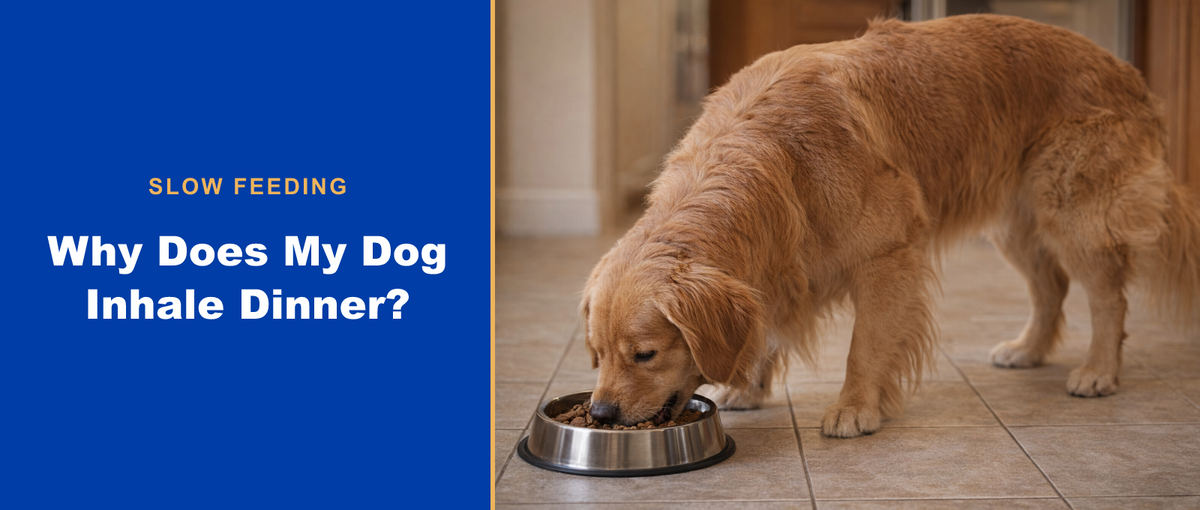
Measure your dog’s eating speed, compare seven slow-feeding methods, match the tool to dry or wet food, and recognize when vomiting or bloating needs a veterinarian.

Why does my dog inhale dinner? Slow feeding

Short answer: if your dog empties the bowl in seconds, first measure how fast the meal disappears and watch what happens afterward. Then choose a method that fits the food: a slow-feeder bowl for wet or dry meals, a snuffle mat for dry kibble and added enrichment, smaller divided meals when your veterinarian recommends them, or training and food puzzles for dogs that need more engagement. The goal is a calmer, more deliberate meal—not a specific number of minutes.

Fast eating is common, but a sudden change in appetite or repeated vomiting deserves more than a new bowl. This guide helps you separate an everyday gulping habit from signs that should be discussed with your veterinarian, then gives you a practical way to test the available slow-feeding options.

Golden retriever outside before a guide to slower, more deliberate dog mealtimes

Why does my dog eat so fast?

Some dogs are naturally enthusiastic about food. Others learned to compete around littermates or other pets, have a history of uncertain access to food, or become highly aroused when the bowl appears. A large meal served once daily can also create a very different eating pattern from smaller scheduled meals.

Do not assume every new increase in appetite is behavioral. If your dog suddenly becomes ravenous, loses weight, drinks or urinates more, steals food unexpectedly, vomits repeatedly, or seems unwell, schedule a veterinary exam. The right fix may involve the underlying cause rather than the feeding container.

What are the risks of eating too quickly?

Dogs that gulp food may cough, gag, regurgitate, vomit, or inhale food material. Rapid food consumption is also one of several factors associated with gastric dilatation-volvulus (GDV), particularly in large, deep-chested dogs. The Merck Veterinary Manual describes GDV as a multifactorial, life-threatening emergency and includes rapid food consumption among the associated factors. Cornell’s GDV guidance likewise lists eating too quickly among multiple risk factors.

A slow-feeding tool does not guarantee prevention of GDV. Breed, body shape, age, family history, meal size, stress, and other factors matter. Ask your veterinarian about your dog’s individual risk, especially if the dog is large, deep-chested, or has a close relative that experienced GDV.

Know the emergency signs

Repeated unproductive retching, a swollen or painful abdomen, excessive drooling, restlessness, weakness, pale gums, or breathing difficulty can signal GDV. Go to an emergency veterinarian immediately—do not wait to see whether a feeding tool helps.

Measure the current meal before changing it

Use three ordinary meals to create a baseline:

  1. Record the food type and portion.
  2. Time from the first bite until the food is gone.
  3. Note coughing, gagging, regurgitation, vomiting, pacing, guarding, or returning to search for food.
  4. Record whether other pets or people were close to the feeding area.

Repeat the same notes after introducing one slow-feeding method. This makes the result visible without claiming that every dog must take ten or fifteen minutes. A successful change is one that produces a meaningfully slower, calmer meal without frustration, chewing the tool, or leaving the dog unable to access the food.

Seven ways to slow down a fast-eating dog

1. Use a slow-feeder bowl

Raised channels make the dog take smaller mouthfuls and move around the bowl. This is often the easiest starting point for wet food, soaked food, or dogs that need a container that can be rinsed after every meal. Choose channels wide enough for the dog’s muzzle and avoid a design that causes scraping or frustration.

2. Use a snuffle mat for dry food

A snuffle mat spreads kibble or small dry rewards through fabric loops. The dog must sniff and search instead of taking one large mouthful. This makes it a feeding tool and an enrichment activity. It is best for supervised dry-food sessions; it is not a chew toy and should be removed if damaged.

3. Divide the meal into smaller portions

Serve one planned daily amount across more than one portion or meal when that schedule is appropriate for your dog. Do not accidentally increase daily calories. The VCA slow-feeding guidance includes portion-spreading tools such as muffin pans and flat feeding surfaces; your veterinarian can help determine the proper daily amount and frequency.

4. Turn part of the meal into training

Use measured kibble as rewards for simple cues, loose-leash work, recall practice, or calm settling. This naturally delivers one piece at a time while giving the dog a job. Subtract every training piece from the daily food allowance.

5. Try a food puzzle

Rolling, sliding, or compartment-based food puzzles can slow access and add problem-solving. Begin on the easiest setting so the dog learns how food becomes available. Escalating difficulty too quickly can create frustration rather than calm engagement.

6. Separate competing pets

If another animal’s presence makes the dog rush, feed behind a closed door, gate, or visual barrier. Give every pet enough space and collect bowls before reopening the area. Address guarding or conflict with a qualified veterinary or behavior professional rather than forcing shared meals.

7. Use a wider safe feeding surface

For suitable dry food, spreading a measured portion across a clean tray can reduce the size of each mouthful. Avoid improvised objects that could be swallowed, chipped, or pushed into the mouth. A purpose-built bowl, mat, or puzzle is safer than dropping rocks, balls, or loose household items into the dish.

Three ways to slow a dog’s meal: a snuffle mat, a slow-feeder bowl, or smaller measured portions

Which slow-feeding method fits your dog?

Situation Best starting point Watch for
Wet or soaked food Slow-feeder bowl A design that is easy to reach and wash
Dry kibble plus enrichment Snuffle mat Supervised use and chewing the fabric
Dog rushes around other pets Separate feeding area Guarding, fear, or conflict
Dog needs mental work Snuffle mat, puzzle, or training Difficulty that rises too fast
Very small muzzle, dental limits, or mobility restrictions Veterinarian-guided accessible setup Pain, fatigue, or inability to reach food

For a direct tool comparison, read Snuffle Mat vs. Slow Feeder. For the complete category guide, setup instructions, and care guidance, read Snuffle Mats for Dogs.

A seven-day slow-feeding test

  1. Days 1–2: use the easiest version of one method and supervise.
  2. Days 3–4: repeat with the same food and portion; compare meal time and behavior with the baseline.
  3. Days 5–7: increase difficulty only if the dog is calm and successful.
  4. At the end: keep the method if it clearly slows the meal without distress, guarding, or destructive chewing.

If nothing changes, switch the tool rather than making the current one excessively difficult. A determined wet-food gulper may do better with a bowl; a bored dry-food eater may respond better to foraging or training.

PuzzlePup Snuffle Mat as a dry-food option

The PuzzlePup Snuffle Mat is designed for supervised use with dry kibble or treats. Its working area is approximately 23.6 × 19.7 inches, with deep fabric loops for hiding rewards. Start with food visible on top, then tuck pieces deeper as the dog learns the game. Machine wash on a gentle cold cycle and air dry flat.

The mat is $29.99. If you also want PuzzlePup’s direct-to-consumer handmade treats, the Enrichment Bundle combines the mat and one treat bag for $39.99. Use the standalone mat when you already have suitable dry food; use the bundle when you want both pieces together.

Turn the next dry meal into a sniff-and-search game

Large working area, deep fabric loops, machine-washable care, and a start-easy setup for supervised enrichment.

Shop the Snuffle Mat → Compare feeding tools

Frequently asked questions

How fast is too fast for a dog to eat?

There is no universal minute cutoff for every dog and meal. Look for gulping, coughing, gagging, regurgitation, vomiting, marked arousal, or finishing before the dog has taken normal pauses. Measure a baseline and aim for a meaningfully slower, calmer meal.

Can a slow feeder prevent bloat or GDV?

No feeding tool can guarantee prevention. Rapid eating is one of several associated risk factors. Owners of large, deep-chested, older, or family-history dogs should discuss GDV risk and preventive options with their veterinarian.

Can a snuffle mat hold a full meal?

It can hold a measured dry-kibble meal when the portion, kibble size, and dog are appropriate. Introduce it gradually and supervise. Use a slow-feeder bowl for wet food or when fabric cleanup would be impractical.

What if my dog chews the slow feeder or snuffle mat?

Remove the tool and redirect to an easier food-finding setup. A damaged product can create an ingestion hazard. Snuffle mats are enrichment mats, not chew toys.

Should I feed smaller meals more often?

That can be appropriate for some dogs, but the total daily amount and schedule depend on age, health, food, and veterinary guidance. Do not increase daily calories when dividing portions.

PuzzlePup Snuffle Mat for dogs

Keep your pup busy & happy.

The PuzzlePup Snuffle Mat turns mealtime into enrichment.

Back to blog