
Signs Your Dog Has Joint Pain (And What Actually Helps)

Short answer: The earliest signs of joint pain in dogs are usually subtle — hesitating before jumping on the couch, slower on stairs, stiffness after naps that fades once they're moving. It's easy to write off as "just getting older," but joint discomfort is common even in middle-aged dogs and tends to get harder to manage the longer it goes unaddressed. Catching it early — through daily movement, weight management, and mobility supplements — can meaningfully slow the progression and keep your dog more comfortable for longer.
Normie, my service dog, is a big-bodied dog who works hard every day. Watching for joint changes in him isn't optional — it's part of keeping him able to do his job. Here's what I've learned to look for, and what's actually made a difference.
The Early Signs Most Owners Miss
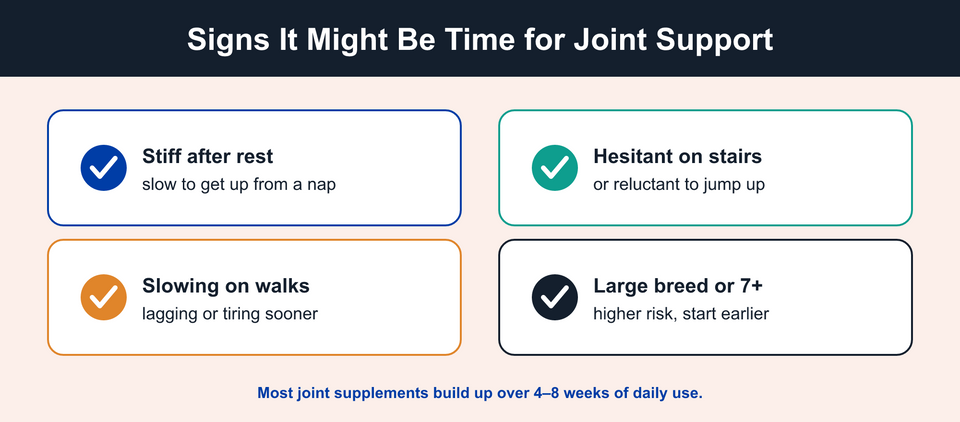
Joint pain rarely shows up as obvious limping at first. It shows up as small hesitations:
- Pausing before jumping into the car or onto furniture
- Taking stairs one at a time instead of bounding up them
- Getting up slowly after lying down, especially first thing in the morning
- Less enthusiasm for walks that used to get an excited reaction
- Licking or chewing at a specific joint
- A slight change in gait — favoring one side, or a "bunny hop" in the back legs
Any one of these on its own might mean nothing. But if you're noticing two or three together, especially if they've crept in gradually over a few months, it's worth paying closer attention.
Why This Happens (It's Not Just Old Age)
Joint pain in dogs usually comes down to wear on the cartilage that cushions the joint. Over time — or sometimes due to genetics, breed, or old injuries — that cartilage thins, joint fluid becomes less effective at lubricating movement, and the bones underneath start to feel more friction. That friction is what causes stiffness and, eventually, inflammation.
A few things make dogs more likely to develop it earlier than expected:
Larger breeds and working dogs. Bigger bodies put more daily load on hips, elbows, and knees. Dogs bred for high activity — retrievers, shepherds, service and working dogs like Normie — often show wear younger than expected simply because they move so much.
Extra weight. Even five extra pounds on a mid-size dog adds meaningful pressure to every step. Weight management is one of the single biggest levers for joint comfort, and often the most overlooked one.
Old injuries. A torn ligament or bad landing years ago can accelerate wear in that joint long after the original injury healed.
Genetics. Hip dysplasia and certain joint conditions are more common in specific breeds and can start earlier than people expect — sometimes well before a dog is considered "senior."
What Actually Helps
Keep movement consistent, not intense. Regular, moderate exercise keeps joint fluid circulating and strengthens the muscles around the joint that take pressure off it. Long walks are better than occasional high-intensity bursts (like a once-a-week fetch marathon that leaves them sore for days).
Mobility supplements. Ingredients like glucosamine, chondroitin, and green-lipped mussel strengthen the building blocks of cartilage and joint fluid. Our Hip & Joint Soft Chews combine these with MSM and turmeric to improve mobility and comfort from the inside — the same formula we rely on to keep Normie moving comfortably through long work days.
Weight management. If your dog carries extra weight, talk to your vet about a realistic target. Even a modest reduction takes real pressure off the joints.
Low-impact enrichment on stiff days. On days when a long walk isn't in the cards, mental enrichment still matters. A snuffle mat lets your dog work their brain and nose without hard impact on their joints — a good substitute when mobility is limited.
A full-body approach. Joint wear, skin health, and general vitality are connected — a dog that feels better overall tends to move better too. Our Complete Care Bundle pairs mobility formula with skin and coat nutrients for dogs that need change in more than one area.
Traction and comfort at home. Non-slip rugs on hardwood or tile, a ramp for the car, and a useful orthopedic bed all reduce the number of hard landings and slips your dog's joints absorb in a normal day.
Not sure where to start? Our hip & joint quiz walks through your dog's specific signs and activity level to point you toward what's most likely to help.
When to Call Your Vet
At-home changes work well for mild, early-stage stiffness. See your vet if:
- Your dog is suddenly unwilling to put weight on a leg
- There's visible swelling, heat, or pain when you touch a joint
- Stiffness doesn't loosen up after 10-15 minutes of gentle movement
- You notice muscle loss in one leg compared to the others
- Your dog seems painful, withdrawn, or unusually irritable
Your vet may recommend imaging, prescription anti-inflammatories, or physical therapy depending on severity. Always follow your vet's guidance — supplements improve joint health, they don't replace veterinary care for diagnosed conditions.
Frequently Asked Questions
At what age should I start worrying about my dog's joints?
Large and giant breeds can benefit from mobility formula starting as early as 1-2 years old, especially if they're highly active. Smaller breeds typically show signs later, often around 7-8 years. If you notice any hesitation with jumping or stairs at any age, it's worth addressing rather than waiting.
Can joint supplements help even if my dog isn't showing symptoms yet?
Yes — many owners of at-risk breeds (large, working, or historically joint-prone) start supplements proactively as a maintenance step, similar to how you might improve skin and coat health before problems appear. Consistency matters more than starting late.
How long before I'd notice a difference from a joint supplement?
Most dogs show a noticeable improvement in comfort and mobility within 4-6 weeks of daily use. Cartilage-active ingredients work gradually, building up over time rather than acting like a fast-acting pain reliever.
Is it normal for my dog to be stiff only in the morning?
Morning stiffness that loosens up within 15-20 minutes of moving around is a very common early sign of joint wear. It's one of the clearest early indicators worth acting on before it progresses further.
Are joint supplements safe to give long-term?
Ingredients like glucosamine, chondroitin, and green-lipped mussel are generally well-tolerated for long-term daily use, and the joint ingredients work best as a consistent, ongoing habit rather than an occasional add-in. As always, check with your vet, especially if your dog is on other medications.