
Natural Dog Treats: What to Check Before You Buy
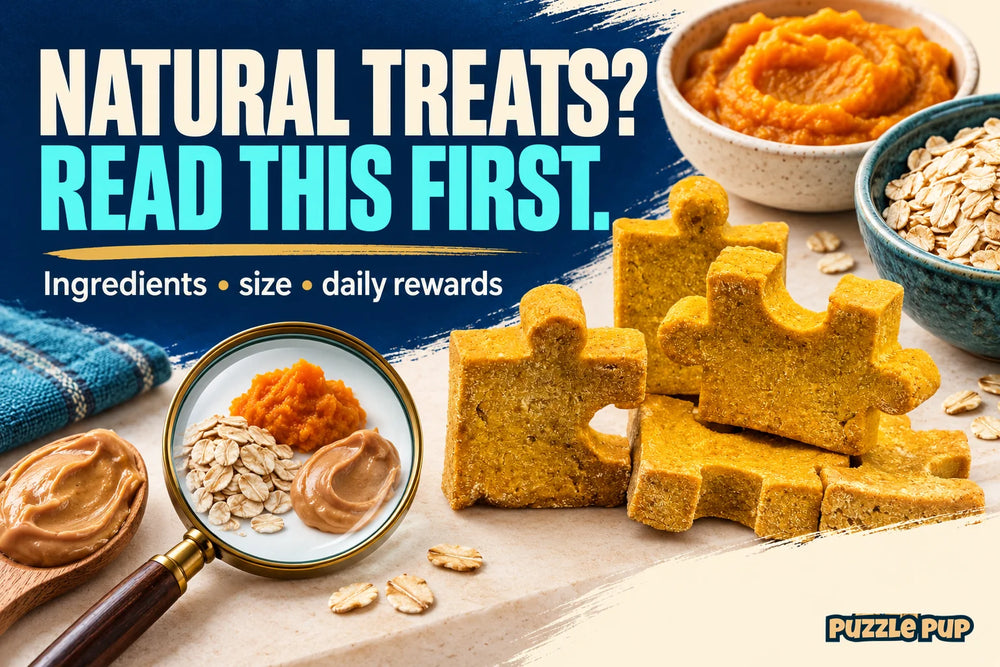
A useful dog treat fits your dog, your ingredients checklist and the moment you want to reward. Start with what is in the bag and how your dog eats it. The word “natural” does not answer those questions on its own.
This guide helps you compare a crunchy cookie, a small training reward and food for a sniffing game without getting lost in front-of-bag claims.
A quick treat checklist
Start with the full ingredient list
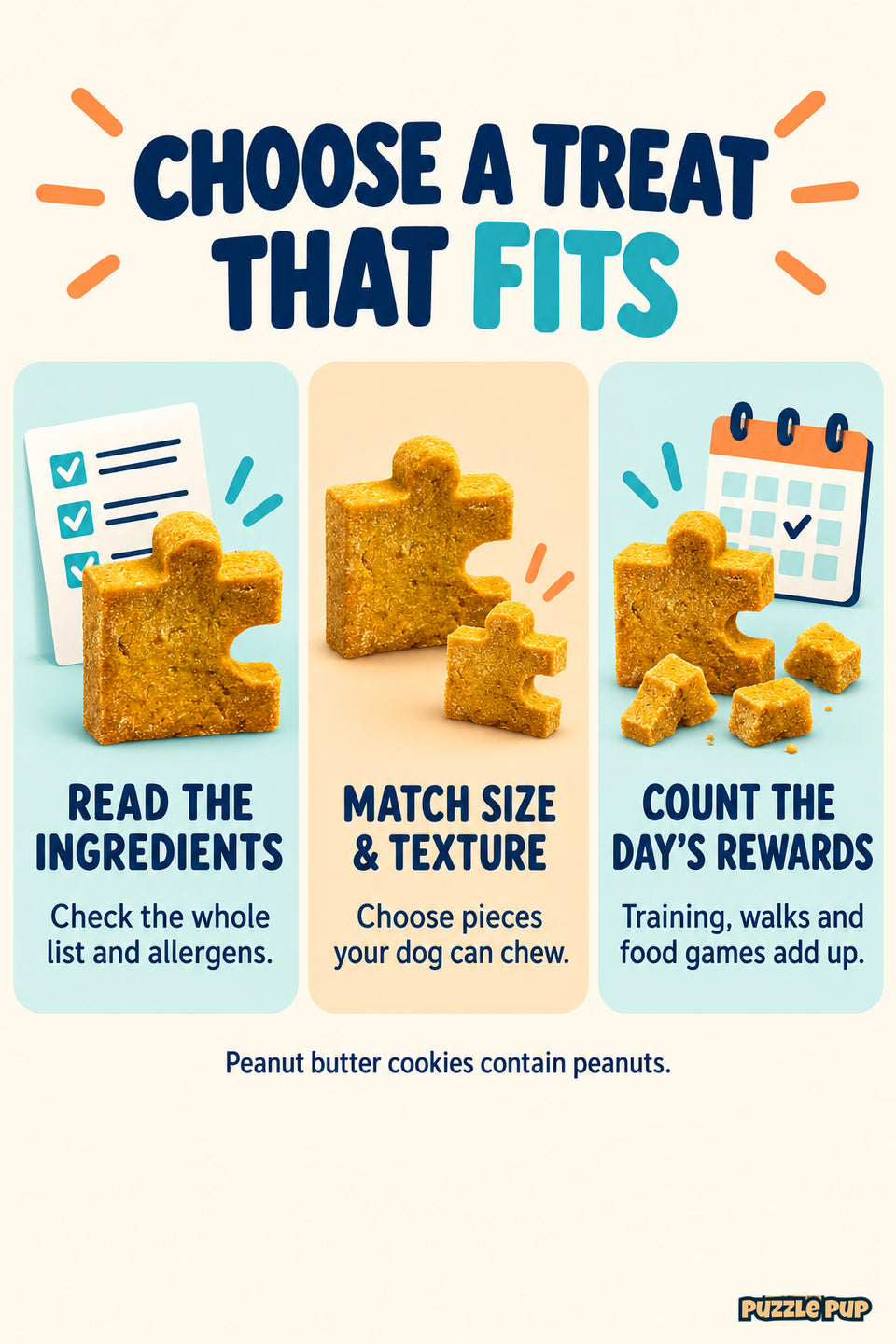
Read every ingredient, including ingredients your dog needs to avoid. The FDA’s animal-food labeling overview explains that ingredients are generally listed by weight using common or usual names. A short list can be easy to read, but it does not make a treat suitable for every dog.
If your dog has dietary sensitivities or follows a prescribed diet, choose treats with your veterinary team. Check allergens even when familiar ingredients appear on the front of the package.
Match the reward to the job
| You want to… | Look for… | Try this before buying more |
|---|---|---|
| Reward repeated training steps | A small piece your dog can comfortably eat | Break one larger treat into suitable pieces and watch how easily your dog collects and chews them. |
| Fill a snuffle mat | Dry kibble or dry treat pieces | Check whether breaking the treat leaves mostly usable bites or lots of powder. |
| Give an occasional crunchy reward | A texture and piece size that fit your dog | Supervise eating and choose a smaller piece if a whole cookie is unsuitable. |
| Keep to a restricted diet | Ingredients your veterinary team has cleared | Bring the complete ingredient list rather than relying on a “natural” claim. |
What is in PuzzlePup’s pumpkin and peanut butter cookies?
Our Pumpkin & Peanut Butter Dog Treats list four ingredients:
- Pumpkin
- Gluten-free oat flour
- Organic peanut butter
- Molasses
They are baked by hand into crunchy puzzle-piece cookies and can be broken into smaller rewards. Contains peanuts. These treats are homemade and not subject to state inspection. They are treats, not a complete meal or a treatment for a health condition.
The current website offers 25-treat and 40-treat bags. Choose by how often you plan to use them and check the product page for current bag details, preparation time and availability.
Think about pieces, rather than whole cookies
Open the bag when you have time to try one reward with your dog. Break the cookie over a plate, choose a piece they can comfortably chew, and check the remaining crumbs. This tells you whether the texture fits your intended use before you fill a pocket or a feeding toy.
A product photo shows shape and texture; it is not a reliable size scale. Use the listed bag details when shopping and choose individual reward pieces for your dog. Keep fresh water available and supervise eating.
Plan the day’s treats before you start
The World Small Animal Veterinary Association recommends keeping treats below 10% of daily calories. Count rewards from training, walks and food games together. If calorie information is missing, ask the maker; your veterinary team can help set an individual allowance.
Part of your dog’s usual measured dry food can also be used for a sniffing game. You do not need to make every hidden find an extra treat.
Two ways to explore the products
For crunchy rewards: compare the cookie ingredients and choose your bag.
See Pumpkin & Peanut Butter Dog Treats
For a supervised food search: check the PuzzlePup Snuffle Mat and use suitable dry food. The Mat-only option includes no food or treats. The item page also lists a Mat + FREE treat-bag option; check its current inclusions and availability before choosing.
Read what to put in a snuffle mat before setting up your first game.
Questions worth answering before checkout
Are “natural” treats right for every dog?
No. Read the ingredients and choose for your dog’s dietary needs, chewing ability and intended use.
Do these cookies contain peanuts?
Yes. PuzzlePup Pumpkin & Peanut Butter Dog Treats contain organic peanut butter and are unsuitable if peanuts are an ingredient your dog must avoid.
Do I need a separate treat for a snuffle mat?
No. You can start with your dog’s usual dry kibble. If you choose a baked reward, break it into suitable dry pieces and clear away crumbs afterward.
Product ingredients and website bag counts were checked on October 6, 2026. Keep exploring: washing and drying a snuffle mat · all free dog guides.